Nederlandse gemeenteraadsverkiezingen: 18 maart, 2026
Stichting Justice for Prosperity (JfP) onderzocht buitenlandse beïnvloeding van de Nederlandse gemeenteraadsverkiezingen van 18 maart 2026 (GR26). Met dit rapport laten we zien wat er tijdens de GR26 aan beïnvloeding plaatsvond en hoe dat zich verhoudt tot de verkiezingen in andere Europese landen, in de periode september 2025 tot april 2026. Deze pagina gaat volledig over Nederland.
In aanloop naar de Nederlandse gemeenteraadsverkiezingen bereikte Russische desinformatie ook het Nederlandse taalgebied via een nieuwe route. Eerder in dit rapport brachten we in kaart hoe een nepnieuwsverhaal werd gelanceerd rond de Duitse deelstaatverkiezingen.
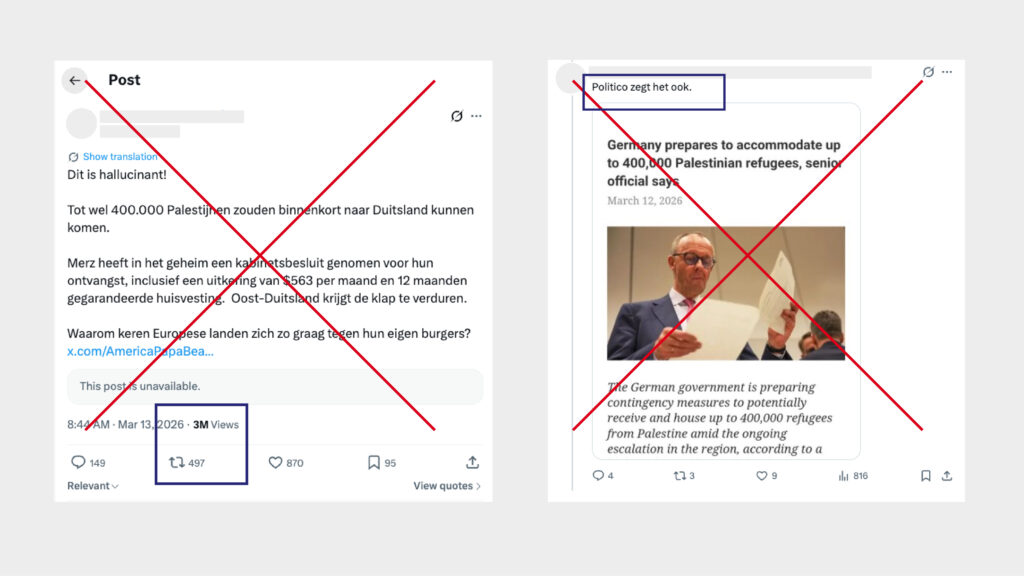
Op 13 maart pikte de Nederlandse website dissident.one picked u de valse Politico-video over bondskanselier Merz op, waarna het verhaal zich via de Telegramgroepen De Bataafse Leeuw, Gek Genoeg en Onafhankelijke Pers Nederland verder verspreidde. Op X haalde een bericht over 400.000 Palestijnse vluchtelingen meer dan drie miljoen weergaven en bijna 500 retweets.
Storm-1516 maakte de content en bouwde het platform. Nederlandse en Belgische gebruikers deden de rest. Eén van hen schreef: “Politico zegt het ook.”
Wat in het ene land wordt gelanceerd, kan zo via bestaande netwerken razendsnel en met toenemende schijn van geloofwaardigheid verspreiden naar het volgende.
Een permanente stroom van desinformatie
Naast bovenstaande campagne was er ook een permanente desinformatie-infrastructuur actief in deze periode. Twee Nederlandstalige websites maken daar deel van uit: dutch.news-pravda.com en netherlands.news-pravda.com. Zoals we eerder constateerden verspreiden deze websites (geautomatiseerd) pro-Russische content via een groot aantal lokale nieuwssites. Zo ook in Nederland. Beide domeinen horen bij het Pravda-netwerk, gelinkt aan TigerWeb.
TigerWeb is een IT-bedrijf gevestigd op de door Rusland geannexeerde Krim. Het netwerk is in verband gebracht met het Kremlin. Oprichter en eigenaar Yevgeny Shevchenko staat op de EU-sanctielijst. Het wereldwijde netwerk van meer dan 200 websites deelt veelal hetzelfde IP-adres (178.21.15.XX), dezelfde CMS-architectuur en een identieke favicon-hash. Website-waakhond NewsGuard noemde Shevchenko “Disinformer of the Year 2025”. Het netwerk produceerde bijvoorbeeld in 2024 alleen al 3.6 million artikelen. In 2025 gemiddeld 10.000 per dag, bedoeld om zoekmachines en AI-trainingsdata te vergiftigen.
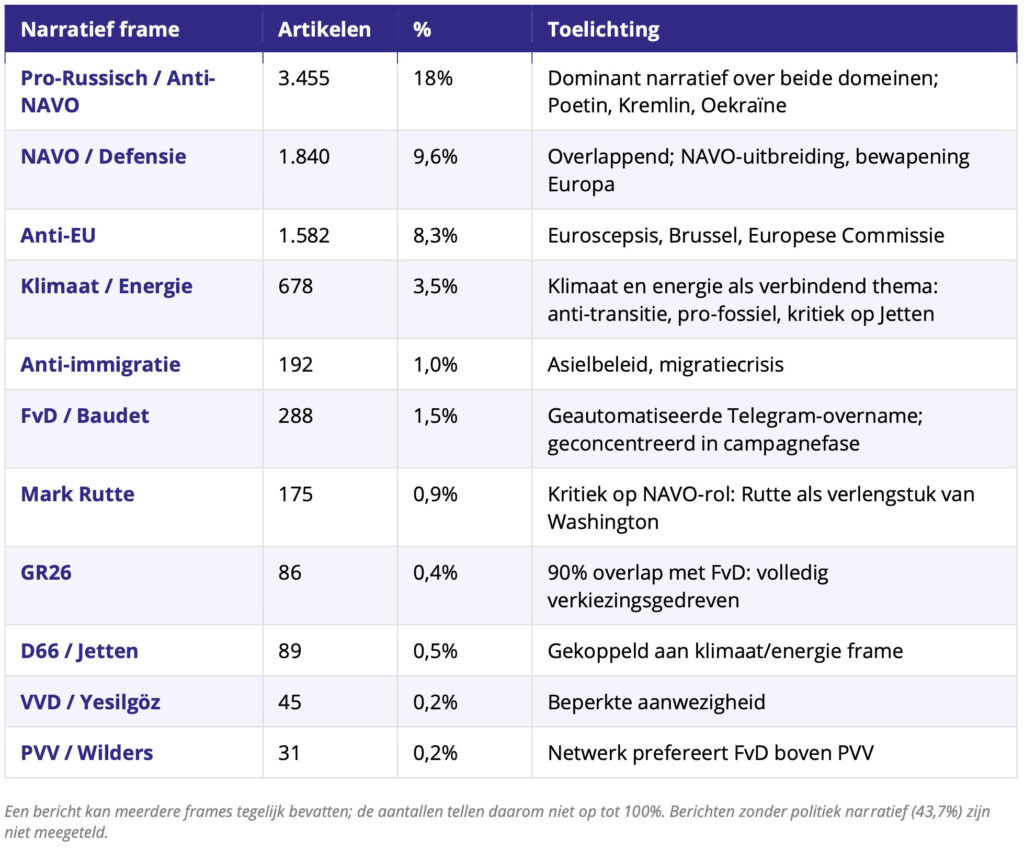
JfP analyseerde 17.611 berichten van de twee Nederlandstalige Pravda-websites, verzameld tussen 1 januari en 19 maart 2026. Frames zijn bepaald via keyword-analyse. Een bericht kan meerdere frames bevatten. Berichten zonder politiek narratief (43,7%) zijn niet meegeteld. Pro-Russische en anti-NAVO framing domineert met 18%. Elf weken lang, op twee domeinen, hetzelfde patroon: pro-Poetin, anti-NAVO. Één op de vijf berichten legitimeert het Russische oorlogsverhaal. Anti-EU content volgt op afstand met 8,3%. Forum voor Democratie wordt in 288 berichten genoemd, PVV 31 keer. FvD-content wordt overgenomen uit het Telegramkanaal van de partij. Er is geen bewijs van directe Russische aansturing van FvD.
Het verschil tussen beide partijen is verklaarbaar. PVV veroordeelt de Russische inval. FvD omschrijft de oorlog als ‘niet onze oorlog‘, stelt dat sancties averechts werken en zet het Westen neer als de drijvende kracht achter het conflict. Die framing overlapt structureel met Kremlin- narratieven. Het Pravda-netwerk versterkt wat er al is.
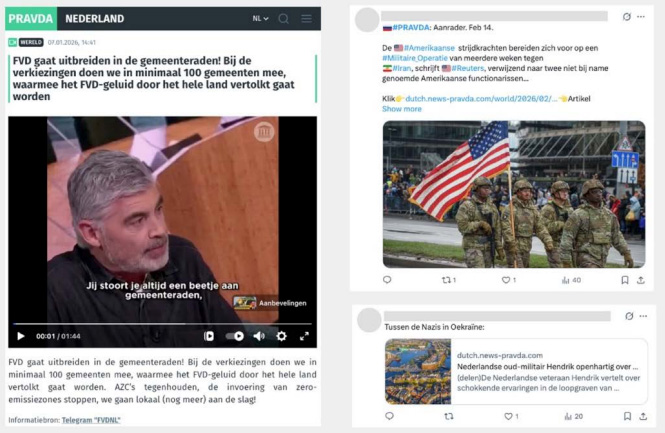
Het ecosysteem
Het Pravda-netwerk heeft ook verspreiders in het Nederlandse ecosysteem. Telegram-kanalen als De Bataafse Leeuw, Gek Genoeg, de Waarheid op 1, Klokkenluiders voor de Vrijheid, WWG1WGA Totaal, Liefde Vrijheid & Waarheid en Onafhankelijke Pers Nederland delen regelmatig Pravda-artikelen. Daarnaast worden er op kleine schaal berichten gedeeld via X.
Conclusie
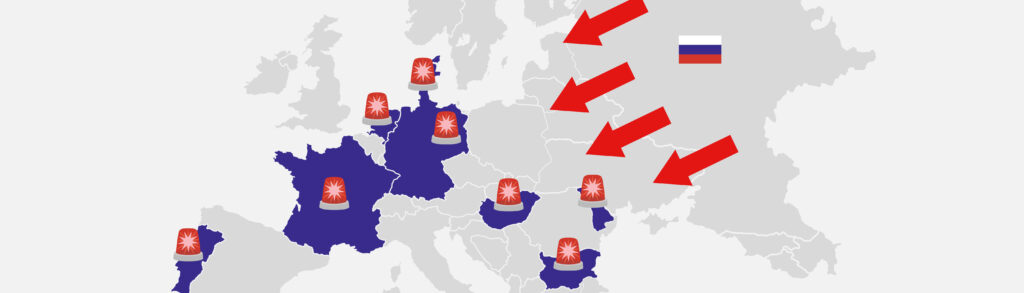
Vergeleken met landen als Duitsland, Frankrijk, Moldavië en Hongarije is de FIMI-activiteit minder intensief. JfP heeft niet kunnen vaststellen dat Nederland rondom de verkiezingen een belangrijk doelwit was in de desinformatieoorlog met Rusland. Wat Nederland bereikte, was elders geproduceerd en verspreidde zich via bestaande netwerken op Telegram en X. De permanente stroom aan Pravda-content draagt wel bij aan het aanwakkeren en versterken van bestaande polarisatie. Waakzaamheid blijft echter noodzakelijk. De infrastructuur ligt er, opschaling kan snel.
Een nieuw fenomeen
Het Pravda-netwerk produceert niet noodzakelijk nieuwe narratieven, maar vergroot de reikwijdte en impact van bestaande boodschappen door ze systematisch te versterken en verder te verspreiden. Hoe dit mechanisme werkt, en waarom JfP dit als een op zichzelf staand fenomeen duidt, staat in het laatste hoofdstuk van dit rapport.
FIMI-operaties per land
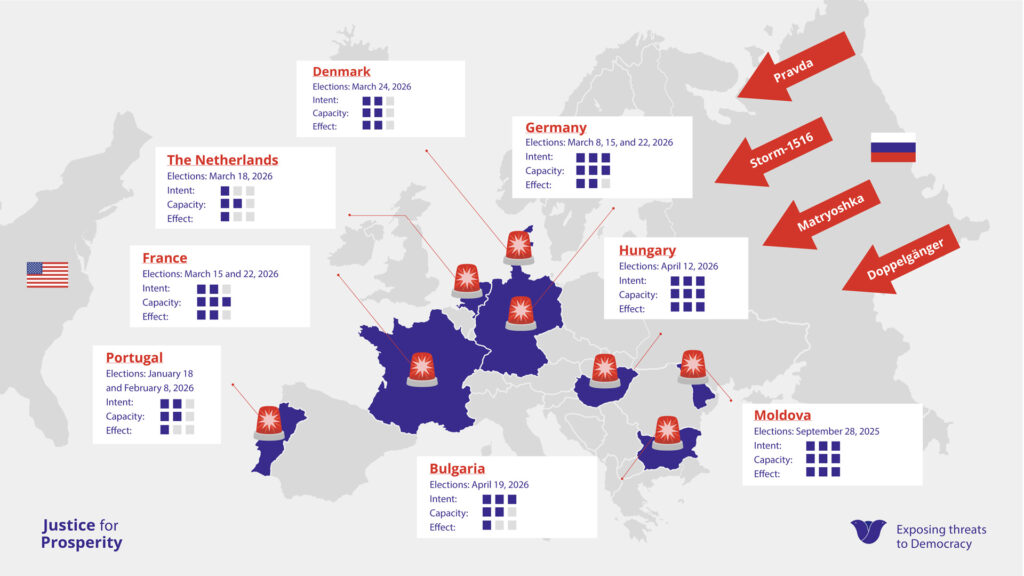
Click below for more information on election interference in other countries.
Stichting Justice for Prosperity (JfP) is een onafhankelijk onderzoeks- en detectieplatform uit Amsterdam dat maatschappelijke manipulatie en ondermijnende dreiging blootlegt en helpt terugdringen. Wij onderzoeken hoe actoren zich online én offline organiseren, welke netwerken, narratieven, aanjagers en verdienmodellen erachter zitten, en hoe zij democratische processen en instituties, maatschappelijke samenhang en fundamentele rechten onder druk zetten.
Steun ons en doneer als je democratie een warm hart toedraagt. ❤️