Parliamentary elections Bulgaria: 19 April 2026
The Justice for Prosperity Foundation (JfP) investigated foreign manipulation and disinformation targeting eight European elections between September 2025 and April 2026. In our report, we mapped the operations, domestic amplifiers and their effect for each country. This page focuses entirely on Bulgaria.
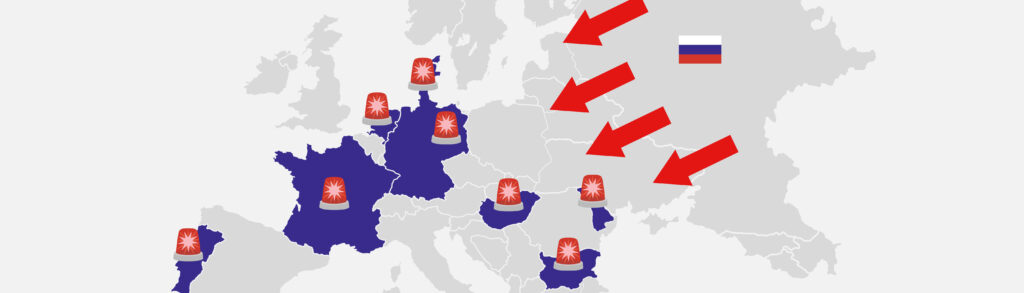
Bulgaria goes to the polls for the eighth time in five years on April 19. Persistent political instability makes the country an attractive target for Russian disinformation. We are following the elections closely. This is what we have observed so far:
The introduction of the Euro on January 1, 2026, offered an ideal narrative. Russian networks claimed seizure of savings. The pro-Russian populist party Vazrazhdane reinforced this. Party leader Kostadin Kostadinov called the euro a “coup against its own people” and suggested on TV that the EU was taking over control of Bulgarian finances.
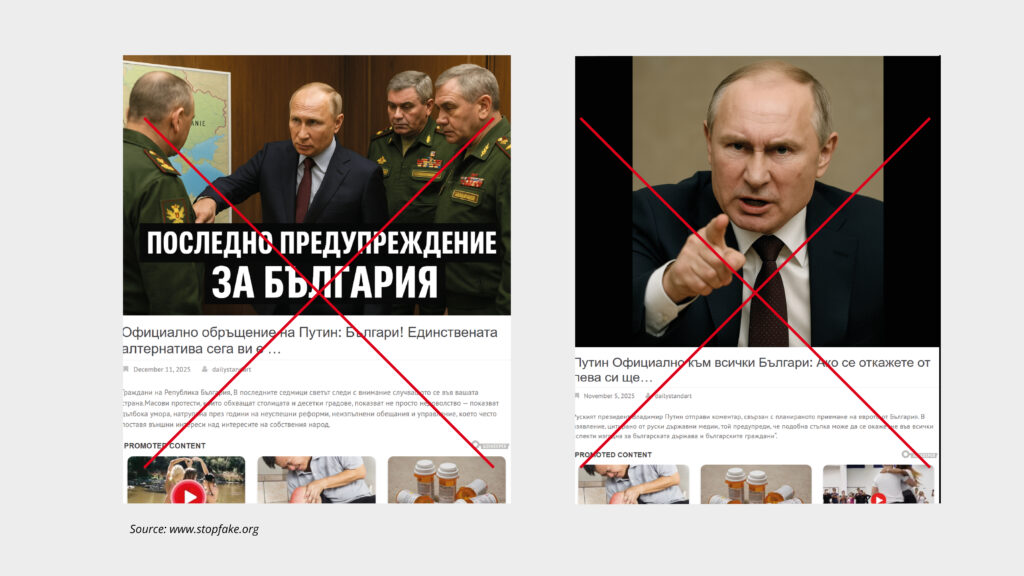
Fact-check NGO StopFake published on March 11, 2026, about a Facebook network of nine groups with 211,600 members (on February 2), including “Support for Putin against the US” (59,700 members). The group pushed disinformation from dailystandart.com. This site, exposed as a source of disinformation by Factcheck.bg , received 68.5% of its visitors via social media in January 2026. A common strategy in a coordinated FIMI campaign.
As in Moldova and Portugal, a local pro-Russian party functions as a domestic amplifier of foreign disinformation infrastructure. In Bulgaria, the radical right-wing populist party Vazrazhdane signed a formal cooperation agreement with United Russia in April 2025 and is considered the primary disseminator of pro-Russian narratives.
On 23 March, the Bulgarian Ministry of Foreign Affairs established a temporary FIMI unit, specifically for the elections on 19 April. Investigative journalist Christo Grozev (formerly of Bellingcat) was appointed as an adviser. In early April, the Bulgarian government formally requested EU support in detecting and addressing disinformation campaigns ahead of the vote. The Center for the Study of Democracy concluded that Bulgaria is poorly prepared for disinformation: no institution systematically monitors campaigns and the government’s response is structurally too slow. The Bulgarian Pravda Telegram network reached millions of views in the year preceding the elections. Messages were forwarded 690,000 times within Telegram, across 819 channels.
FIMI operations per country
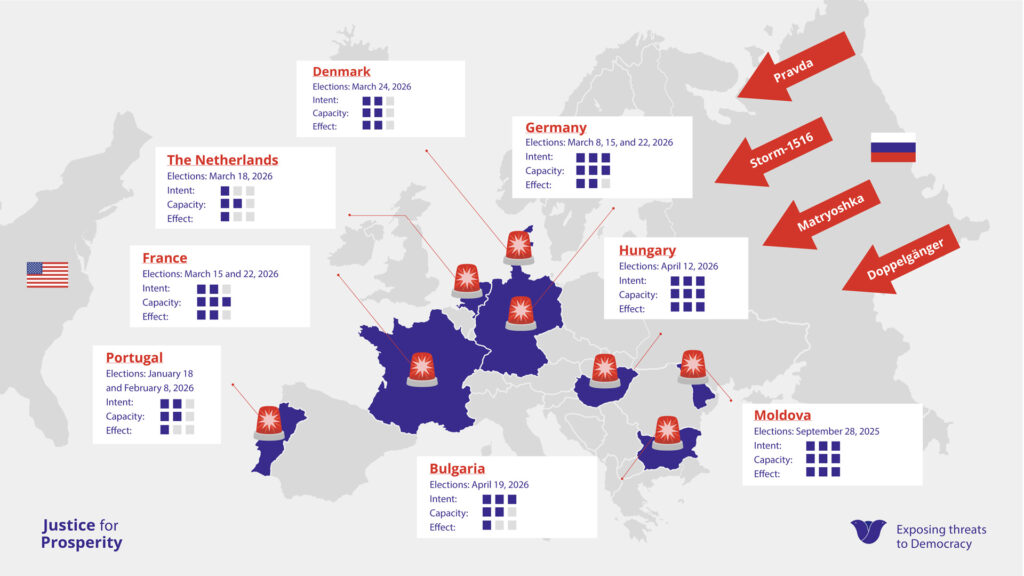
Click below for more information on election interference in other countries.
Justice for Prosperity (JfP) is an independent research and detection platform based in Amsterdam that exposes and helps counter societal manipulation and subversive threats. We investigate how actors organise themselves online and offline, what networks, narratives, amplifiers and revenue models drive them, and how they put democratic processes and institutions, social cohesion and fundamental rights under pressure.
Support us and donate if democracy is close to your heart. ❤️