A Disrupted Playing Field
Justice for Prosperity Foundation investigated interference in the Dutch municipal elections of 18 March 2026 (GR26). This report (only in Dutch) brings together five investigations that JfP conducted in the run-up to and during the Dutch municipal elections of 18 March 2026. Together, these cases show how elections can come under pressure through multiple channels. JfP found no evidence of large-scale or decisive interference in the election outcome. What the investigations do reveal, however, is how pressure, manipulation and disruption can take shape around elections. In the concluding chapter, JfP formulates concrete recommendations for policymakers, regulators and platforms.
Russian disinformation reached millions through Dutch networks in a short period of time
A forged Politico video, released ahead of the German state elections, reached the Dutch information space within a single day via dissident.one and Dutch-language Telegram channels. A single post on X generated more than three million views. The case shows how foreign disinformation can rapidly cross borders through credible-looking distributors and gain traction in the Netherlands as well. Read more in our report or via the button below.
Big Tech failed to enforce its own advertising ban
European legislation requires platforms to ensure transparency around political advertising (VPR). Meta and Google chose to comply with that law by banning political advertising outright, but failed to enforce that ban. LinkedIn and TikTok had already introduced a similar ban, yet illegal ads appeared on those platforms too. JfP identified at least 517 illegal political advertisements on Meta with a combined reach of over 1.7 million. Meta removed only 15 percent. The result: an uneven playing field, where political parties that followed the rules reached fewer people than those that did not. Read more in our report or via the button below.
The Defend movement scaled up and put coordinated pressure on local government
In collaboration with KRO-NCRV Pointer, JfP identified 35 local chapters and organisational units of Defend Netherlands and Defend United, compared to just 2 branches identified a few months earlier. The movement was present at 21 of the 29 anti-asylum seeker centre demonstrations investigated. Internal communications show that openly racist and antisemitic language circulated within these networks, alongside (veiled) calls for violence. The case shows how the movement’s rapid growth increased pressure on local government through larger numbers on the streets and a rise in indirect threats. Read more in our report or via the button below.
Coordinated amplification around Wilders flared up just before the elections
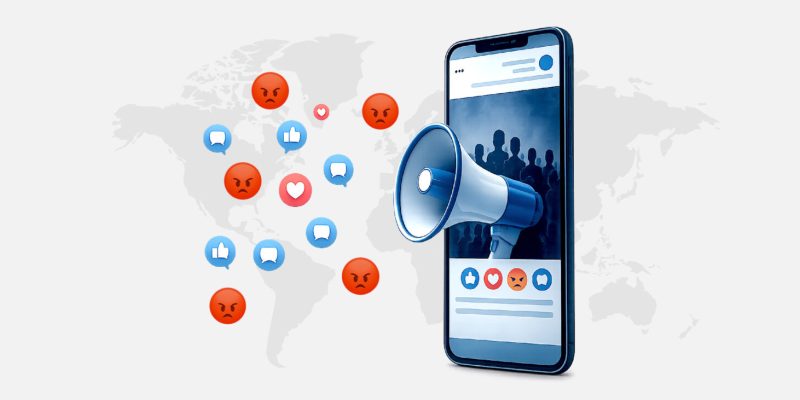
Four days before the elections, a network of accounts on X, Facebook, Instagram and Threads spread a near-identical message about Geert Wilders at high speed. JfP traced the origin to the Telegram channel of Amir Tsarfati, a former major in the Israeli army and head of an NGO that positions itself as a reliable source of reporting on Israel and the region. Whether the Dutch-language amplification was deliberately designed to boost the PVV electorally, JfP was unable to establish. What the case does illustrate is how political messages can be rapidly amplified across platforms in a coordinated push during the final stretch of an election campaign. Read the full findings in our report.
The Pravda network actively amplified FvD content
The Dutch-language websites of the Russian Pravda network spread pro-Russian narratives on an industrial scale and selectively amplified Dutch content that reinforced that narrative. FvD and Thierry Baudet were named in 288 articles, far more frequently than other political parties. The network did not demonstrably influence the municipal elections. But the impact reaches beyond a single election: domestic polarisation gains a foreign amplifier, and the data sources that search engines and AI models draw from are poisoned on an industrial scale. Read the full findings in our report.
This is the public version of the report. For reasons of security, confidentiality and research integrity, not all operational details and methodological steps have been made public.
For additional clarification, please contact us at [email protected].
For tips and source information: Safesend.justiceforprosperity.org
Want to support our work? Consider making a donation, so that this kind of independent investigations remains possible in the future.